Why Self-Reflection Belongs in Voice Lessons (and How Teachers Can Cultivate It)


As voice teachers, we spend a great deal of time listening to our students. We listen to their tone, their breath, their phrasing, and their technique. We notice what’s working, identify areas for improvement, and offer guidance to help them grow.
But how often do we stop and ask our students what they notice?
One of the most valuable things we can do for young singers is give them the opportunity to reflect on their own experiences. Not just whether they sang something correctly, but how it felt, what they noticed, what surprised them, and what they might want to explore next.
Questions like:
What did you notice about your voice just now?
How did that feel different from the last time?
What part of that experience did you enjoy?
What would you like to try differently?
What did you learn about yourself today?
These questions may seem simple, but they invite students to become active participants in their own learning rather than relying entirely on their teacher's observations and approval.
The important part is allowing students to discover their own answers.
It's tempting to guide a student toward what we think they should notice or feel. After all, we're the experts! We may hear an improvement or recognize a breakthrough that the student hasn't yet identified.
But self-reflection isn't about arriving at the answer we want to hear. It's about giving students space to explore their own thoughts, recognize their own experiences, and develop confidence in their ability to understand themselves.
Sometimes their observations will surprise us. Sometimes they'll notice something completely different from what we expected. And sometimes they'll need a little silence before they know what they think.
That's okay.
Helping Students Learn to Reflect
Self-reflection is a skill, and like singing, it develops with practice. Some children will naturally share their observations, while others may initially respond with "I don't know" or look to their teacher for the right answer.
Rather than rushing to fill that space, we can give students time to think. We can reassure them that there isn't a correct response and that their own experience is what matters.
It can also help to begin with questions that invite simple observations rather than judgments. "What did you notice?" opens a different kind of conversation than "Did you think that was better?" One encourages curiosity; the other can encourage students to evaluate themselves against an expectation.
Over time, students can learn to distinguish between observing their experiences and judging their performance.
A student might initially say, "That sounded terrible!" With gentle curiosity, we can invite them to explore further: "What did you notice that made you feel that way?" Rather than dismissing their reaction or immediately reassuring them that they sounded wonderful, we give them an opportunity to understand their own response.
As students become more comfortable reflecting, they may begin asking themselves these questions without prompting. They become more aware of their choices, more curious about their development, and more confident in navigating their own learning.
Learning to Ask Without Leading
For teachers, encouraging genuine self-reflection requires a skill of its own: learning to ask questions without steering students toward predetermined answers.
Consider the difference between asking, "Didn't that feel easier when you relaxed your shoulders?" and "What did you notice when you tried that again?"
The first question suggests the expected response. The second gives the student freedom to describe what actually happened.
This doesn't mean abandoning instruction or withholding our expertise. There is still an important place for technical feedback, demonstration, and guidance. But we can learn to recognize moments when our students would benefit more from discovering something themselves than from being told what to think.
It also means becoming comfortable with answers we didn't anticipate.
A student might love a sound we would like to improve. They might struggle with something we thought was easy. They might be proud of an accomplishment that has nothing to do with the technical objective of the lesson.
All of these responses offer valuable insight into how that student experiences singing.
And perhaps one of the most powerful things we can do is simply listen without immediately correcting, interpreting, or expanding upon what they share.
Practicing Our Own Self-Reflection
If we want students to become thoughtful observers of their experiences, it makes sense to practice that same curiosity ourselves.
After a lesson, we might ask:
Did I give my student enough time to think before responding?
Was I genuinely curious about their answer, or was I hoping they would say something specific?
Did I jump in with my own interpretation before they finished sharing?
What did I learn about this student by listening to their perspective?
These questions aren't meant to evaluate whether we're good teachers. They're opportunities to become more aware of our habits and intentional about the learning environment we're creating.
When we make room for genuine self-reflection, we're teaching much more than vocal technique. We're helping young people develop curiosity, independence, self-awareness, and trust in their own voices, both literally and figuratively.
Those are skills they can carry with them long after their final voice lesson.
After all, our job isn't always to give students the answers. Sometimes it's to give them the space to discover what they have to say.
🌹
Want a lesson curriculum with built-in self-reflection for your students?
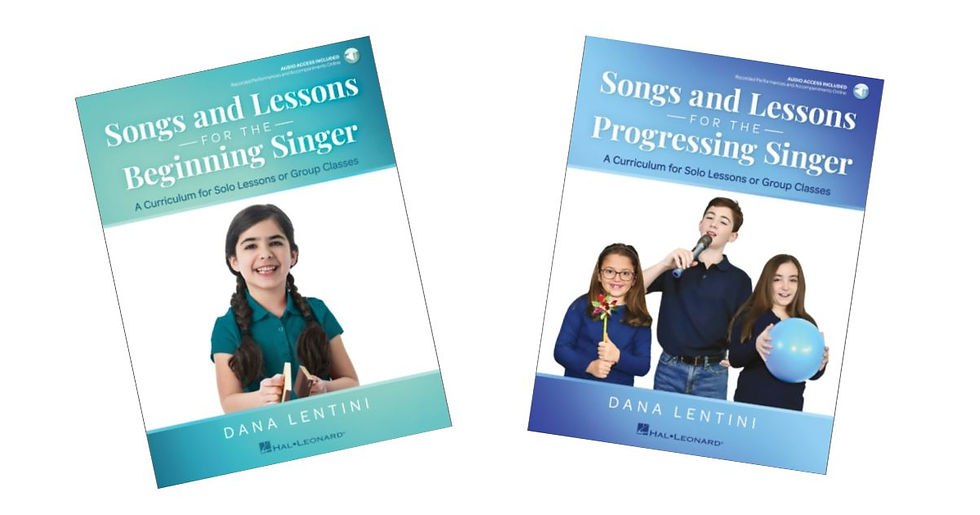
The activity pages in Songs & Lessons for the Beginning Singer and Songs and Lessons for the Progressing Singer were designed to give you not only age- and stage-accessible repertoire but also repeatable, strategic ways to support singers as they grow.